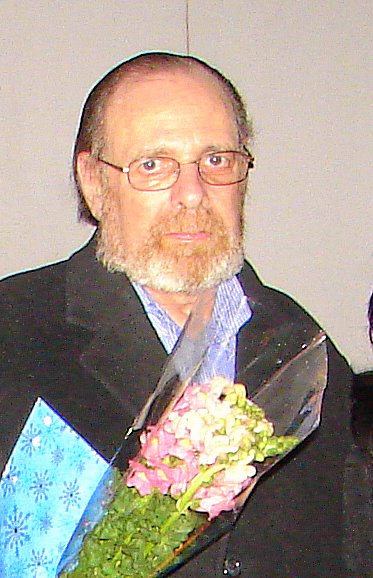
In August 2005, John McKay, a 19-year-old Stanford student and former high school debate champion, committed suicide by rolling up the windows in a car at his mother's Menlo Park home and piping in exhaust fumes.
In the next few weeks, a Colorado doctor who had prescribed a generic form of Prozac for McKay after receiving his request over the Internet, without ever seeing or examining him, will go on trial in Redwood City on possibly precedent-setting charges of practicing medicine in California without a license.
A conviction of Dr. Christian Hageseth, 67, "would send a clear message to those individuals who are blindly writing prescriptions to patients they know nothing about," said the youth's father, David McKay, a former Stanford professor now living in Colorado. They would have to ask themselves, he said, "whether quick and easy money is worth the risk of a criminal conviction and permanent loss of their medical license."
READ MORE @ SAN FRANCISCO CHRONICLE
Showing posts with label prescriptions. Show all posts
Showing posts with label prescriptions. Show all posts
Tuesday, December 30, 2008
Thursday, May 29, 2008
Current Prescriptions Of Psychotropic Drugs Are Irrational For The Patients But Very Rational For The Big Pharma
UK psychiatrist David Healy has attacked current prescription habits of psychiatrists which are strongly influenced by the pharmaceutical propaganda in the fourth 2008 issue of Psychotherapy and Psychosomatics.
Commenting on a paper by Harvard investigators on the psychology of risk and prescriptions of psychotropic drugs, Healy denounces a real crisis in psychiatry at present. In part this stems from the lack of independent studies. Allied to this is a lack of independent access to what data there are and an unsophisticated interpretation of the data that are available, based on conceptual models that seem increasingly inadequate. It is important that clinicians understand the dynamics that impinge on their judgment as it is almost certainly the case that pharmaceutical companies engineer clinical perceptions based on side effect profiles. The basic company position is that clinicians have no thoughts in their minds other than those put there by us or our competitors, and in order to plant a message or dislodge those of competitors companies employ all their sophisticated means.
READ MORE @ MEDICAL NEWS TODAY
Sunday, January 13, 2008
Doctors commonly enlist the power of placebos
Doctors prescribe placebos more often than patients might imagine.
A survey of Chicago-area physicians found that 45 per cent report they have given a patient a placebo at least once, according to a study published in this month's Journal of General Internal Medicine.
Past surveys of Israeli and Danish doctors revealed that 60 per cent and 85 per cent, respectively, admit they've relied on the "placebo effect" to heal patients.
So, should patients worry about their doctors shamming them?
Maybe not. Though prescribing dummy pills is viewed as ethically shady, the placebo effect can work. Brain-scan research indicates that placebos trigger pain-relieving endorphins in the brain. Indeed, anyone who has ever felt better after taking cough syrup may have enjoyed the placebo effect - some studies suggest that sugar water is just as good at healing sore throats. Belief in medicine can contribute heavily to its success.
Doctors turn to placebos for a variety of reasons, according to the Chicago study, including to calm the patient, as a last resort when nothing else works, or simply to get a patient to stop complaining.
READ MORE @ GLOBE AND MAIL
Monday, November 5, 2007
Non-English Speakers Charge Bias in Prescription Labeling
Pharmacies across the city routinely fail to help non-English speakers understand their prescriptions, raising the chances that customers could harm themselves by taking medicines incorrectly, immigrant advocacy groups charge in a discrimination complaint that they plan to file today with the New York attorney general’s office.
The complaint names 16 pharmacies in Brooklyn, Queens and Long Island, most of them operated by chains. It argues that federal civil rights law and state health regulations require pharmacies to provide linguistic help to guarantee that people who speak little or no English receive equal access to health care. That assistance should include interpreters at pharmacies and written translations of medication instructions, the advocates say.
Nisha Agarwal, a lawyer for one of the groups filing the complaint, said the attorney general’s office had already issued subpoenas to several pharmacies listed in an earlier version of the complaint filed in July. The new version names more pharmacies, and an accompanying report includes more examples of comprehension problems non-English speakers have had.
READ MORE @ NY TIMES
Friday, August 31, 2007
Pharmageddon: the prescription pill epidemic
Our increasing reliance on pills has resulted in a 27 per cent rise in prescriptions written by doctors in just five years. It's costing the NHS £10bn a year, £200m of which is wasted on drugs that are never used. Nina Lakhani reports on a dangerous addiction.
Britain is in the grip of a prescription drug-taking epidemic, with unprecedented numbers of medicines being handed out by GPs, costing billions of pounds and stretching already tight NHS resources to breaking point.
Prescription drug use has increased by 27 per cent in the past the five years and the NHS drug bill topped £10bn in 2006. GPs prescribed 918 million medicines last year compared with 721 million five years ago, according to figures obtained by The Independent on Sunday.
Health experts put rocketing prescription numbers down to medical advances, but also point to poor prescribing by GPs, growing public demand for a "pill for every ill" and aggressive marketing tactics by the pharmaceutical industry, which prompted one MP to warn that the UK is heading towards what he called "pharmageddon".
READ MORE @ INDEPENDENT
Friday, July 27, 2007
The Right Rx for Sadness
In the 19th-century novel Hyperion, Henry Wadsworth Longfellow admonished his hero, unlucky in love, to "take this sorrow to thy heart, and make it a part of thee, and it shall nourish thee till thou art strong again." Had Paul Flemming been real and alive today, chances are he would have taken Prozac or Paxil instead. Last month, the Centers for Disease Control and Prevention announced that antidepressants are the country's most commonly prescribed medication, accounting for 118 million prescriptions in 2005. A sign, some experts are wondering, that it's time to reassess?
Although many psychiatrists worry more about desperate souls not getting help, there's a growing concern that medicine often goes to people who shouldn't be taking it. And a consensus has formed that the estimate of how many people will develop depression at some point—1 in 6—might be greatly inflated. "There's no question that the availability of these drugs has increased the diagnosis of depression," says Jerome Wakefield, a professor of social work at New York University. Wakefield is coauthor of the new book The Loss of Sadness, which argues that selective serotonin reuptake inhibitors—Prozac, Paxil, Zoloft—are commonly overused to treat sadness, a normal and healthy response to divorce, sudden unemployment, the end of a friendship, a house foreclosure.
READ MORE @ US NEWS & WORLD REPORT

Monday, July 23, 2007
Child use of antidepressants up four-fold
The use of antidepressants and other mind-altering drugs among schoolchildren has more than quadrupled in the last decade, it is revealed today.
New figures show that GPs are prescribing pills in record numbers to combat stress, violent behaviour and even tiredness.
Under-16s were given drugs for mental health problems more than 631,000 times last year, compared to just 146,000 in the mid-Nineties.
The huge increase has been blamed on a rise in childhood mental illness sparked by family breakdown and high-stakes school exams.
But there are fears that family doctors are coming under pressure to prescribe drugs such as Prozac as a "quick fix" solution, when counselling would be better.
READ MORE @ TELEGRAPH
Subscribe to:
Posts (Atom)